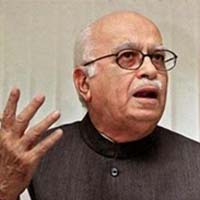
  In a move which appears to be taken from the fact that Information and Communications Technology (ICT) sector is bound to play an important role in India’s progress towards a global economic super power, the main opposition party, Bhartiya Janata Party (BJP) came out with a comprehensive vision of the likely initiatives which it intends to undertake if it comes into power.
To start with, the party aims to provide free mobile handsets to those coming under below poverty line. Also a 2 mbps broadband connection for less than Rs 200 monthly rental is also on cards. The party expects to have equal number of internet subscribers and mobile subscribers by the end of its tenure. For mobile sector, the party aims to have 1 billion subscribers within five years as compared to 400 million at present.
Further to this, the party says that it will allow domestic internet telephony if it comes into power. While the present government has already started initiatives on this front, it could however not reach to a final conclusion on the subject.
BJP also says that it will create 12 million IT related rural jobs. A unique citizen identification number will also be implemented within three years of coming to power by the party.
“A future NDA Government, if elected to office in the coming parliamentary elections, would give high priority to the realisation of this vision, which would help India overcome the current economic crisis; create productive employment opportunities on a large scale; accelerate human development through vastly improved and expanded education and healthcare services; check corruption; and make India’s national security more robust,” said the party’s 30 page IT Vision document.
A National Digital Highway Development Project to create India’s Internet backbone, and the Pradhan Mantri Digital Gram Sadak Yojana for last-mile access even in the remotest of villages will also be set-up.
“Sadly in India, the term ‘broadband’ has lost all relevance. First of all, the Indian definition of broadband is a measly 256 Kbps as opposed to the 2 Mbps definition in most developed countries. Secondly, even 256 Kbps of pure bandwidth is good enough for most data applications, provided the end-user actually gets 256 Kbps of throughput. Unfortunately, when ISPs promise ‘broadband’, they share the same bandwidth pipe with multiple users, as a result of which most users in India receive only a fraction of the bandwidth promised to them. A BJP-led NDA Government would redefine broadband to mean 2 Mbps,” said the party.
|