  To south Bombayites growing up in the 60s, Shemaroo, in fancy Cantonese-like letters on its awning, was a little lending library of dog-eared novels and comic books strategically located on the ascent to Malabar Hill. As TV began displacing the leisurely read, it gradually acquired a collection of videocassettes and DVDs and forty-some years later, Shemaroo is now a major DVD publishing house and content owner of major Bollywood titles on disk, also extending its brand to distribution and post-production facilities.
Keeping step with its customers’ shortening attention spans and lengthening time on the move, it has ventured to provide its escapist fare directly on the fourth screen.
One of Shemaroo’s early innovations into mobile content was to condense versions of its popular movies Golmal and Chupke Chupke from 2 hours to 15 minutes in length, which BPL Mobile agreed to run over its GPRS portal. While this did not win critical plaudits, it helped get the content provider’s feet wet.
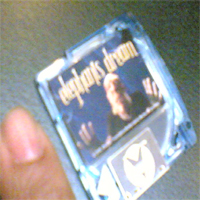
At Mobile World Congress in Barcelona in mid-February, Spice Telecom’s handset division tied up with Shemaroo as one of the content providers for its MoviePhone, a world first which is due to be launched in India and in south Asia around June 2008 with further plans for a global roll-out. A micro DVD housed in a 1 1/2” by 1 1/2” cartridge could become its ticket to mobile distribution.
Shemaroo will license titles like Dhamaal, Bal Ganesh and Manorama Six Feet Under, creating master versions using MPEG 4 compression. The encoding technology is provided by Vmedia, a US based company, who also works closely with Spice on marketing and logistics. The disks provided by Cinram are inserted into specially-designed phones equipped with player technology miniaturised by Panasonic and manufactured by an OEM in China.
This innovative collaboration will allow any mobile customer to purchase these phones which have a 2.8” TFT screen with a high resolution colour display, wireless music, a TV out connection and battery life of 3.5 hours for a full-length movie. Movie disks could also be easily rented or purchased from a retail or DVD rental outlet.
It is too early to tell if a widespread use of these phones and a successful distribution strategy for the ‘microdisks’ could end up cannibalizing the revenues from 3G, but they may pre-empt the mobile network operators’ business model which is premised on download and streaming of visual content by a movie-mad public.
Shemaroo’s director Hiren Gada, the nephew of the founder, handles overseas acquisitions and new initiatives, is cautious about the possibilities of the new medium. “Content owners are quite excited with the medium, but 3G and MoviePhone are based on different business models and address different needs of consumers,” he says. “For insertable media to succeed, the physical distribution and availability of the titles on disk needs to be well in place, whereas the 3G network offers the ability to digitally search and download content of the consumer’s choice.”
While broadband mobile is good for streaming, he notes, it lacks the capacity to store long-form content. The costs of the Vmedia disks are still being worked out, but they will not be unaffordable, he says, another point where they could potentially score over network downloads. In the ultimate analysis, MoviePhone-type devices will probably be the medium for full-length films, while 3G will be the channel of choice for short form content, concedes Gada.
Another network bypassing initiative Shemaroo has been incubating with technical partner Media Magic is storage of films on the mobile phone’s memory card. A single 1Gb card can store four movies, costing no more than Rs. 50 to 100 each and would be pre-loadable at the point of purchase. A customer would pay to unlock the encrypted media. Alternatively, films could be downloadable from kiosks at retail outlets. “Through this business model, whoever owns the IPR will have one more monetization stream,” says Gada.
Shemaroo’s strategy of “co-opetition” may win it friends and enemies in the mobile network business, but Gada’s outlook is positive.
|