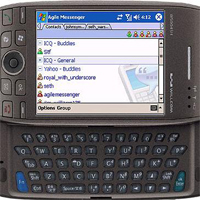
  Mobile Instant Messaging (MIM) may replace SMS (texting) and eventually email from PC, a survey from TNS Technology has found. The TNS Global Telecoms Insight (GTI) study, which interviewed 17,000 respondents across 30 countries, has found that once mobile users adopt MIM it will overtake other messaging tools to become the primary non-voice method of interacting - with potentially dramatic consequences for service and network providers'' revenue.
Among those who use MIM, it is the most used feature on their phone: 61% use it daily, compared to only 55% who use SMS daily and only 12% who use email on their mobile.
Instant messaging is also taking a larger share of all messaging communications.
In fact MIM has become so popular, that now 11 out of every 100 messages sent by mobile devices or fixed PC globally are instant messages. However, among MIM users 36 out of every 100 messages sent is an Instant Message by their mobile, making this the dominant messaging form for these users.
The number of messages sent via SMS falls dramatically among MIM users from 38 to only 23 messages per 100. Surprisingly, MIM users also use fixed email less with 21 out of every 100 messages sent via this medium, compared to 31 messages among all consumers.
Matthew Froggatt, Managing Director of Global Technology for TNS said that "Once a mobile phone user has access to the internet from their handset, the cost of instant messaging is next to nothing, as the only cost is a very small data transfer fee. With consumers being accustomed to instant messaging from their PC from companies like Yahoo and MSN, and more mobile operators offering unlimited use of web browsers, the take up of MIM is going to increase significantly - leaving SMS and fixed email from PC behind."
Currently 8% of all mobile users globally use MIM, with the highest number of users in Hong Kong (23%). However, use of MIM in China (Tier 1-3 cities) is also very high (16%) suggesting a massive opportunity among the country's 500 million mobile subscribers. In China and other developing markets (India, 15%; Brazil, 10%), there is evidence that MIM has leapfrogged other messaging tools demonstrating consumers' preference to this as an entry level non-voice communication tool.
Parijat Chakraborty, vice president (Technology) of TNS India said, "Mobile messaging in India is very much synonymous with SMS, owning to mass adoption. MIM is still not a commonly used service. However, with dropping GPRS connections charges and innovative packages, users will soon realize the financial benefit of sending MIM, over long SMS."
Froggatt continues "There are some notable exceptions to the ubiquity of SMS messages, like the US - where SMS did not take off until relatively recently - and Japan - where consumers moved straight to mobile email. However where mobile operators have profited heavily from SMS these findings present a real challenge for their businesses. Do they try and keep consumers focused on SMS to maintain their revenue base, or offer consumers more choice in messaging? With increasing internet functionality on new mobile phones, and MIM's strong mass market appeal, operators may have no choice but to promote this feature more widely." |